The Heavy Gate

We all start in misdemeanors.  If you are going to get locked up over a misdemeanor, you are sent to jail.  Usually, you spend no more than 180 days there.  The most common sentences are for 30-60 days.  So you stand at counsel table and plea bargain with defense lawyers over these numbers.  You might say, “this DUI was particularly bad, I want 30 days jail in addition to the normal alcohol treatment programs.”  And the defense lawyer, invariably, wants a plea deal that will keep her client out of jail.  They ask you to imagine what jail would be like for their defendant.  Don’t do that to them, the lawyer will say.  And I think most young prosecutors actually do try to imagine what it would be like to do time in jail.  We take a jail tour during our new hire training.  I remember that it was eye-opening.  I remember being surprised by the building itself, as much as anything else.  It looked like a high school, complete with cinderblocks everywhere and bad murals on the walls.

Prosecutors, even in misdemeanors, have a lot of discretion.  So when you are standing there talking to the defense lawyer and thinking about what amount of jail (if any) is just, you have to imagine the impact of the jail on the defendant.  Will this jail term deter future misconduct and punish past misconduct?  In order to answer that question, you can’t avoid a more basic question.  A more primitive question.  How unpleasant will this be for the defendant?  The defendant might be a hardened criminal, with many years served in prison already.  In that case, the jail term is going to be a walk in the park, then it might not be a deterrent at all, nor is it much of a punishment.  On the other hand, a suburban kid with no record might be understandably terrified of jail.  This person might be extremely deterred by the thought of even a short jail term.  This hypothetical delicate suburbanite might suffer immensely in jail, a truly extreme punishment.  So we stand there and put ourselves in the shoes of defendants, imagining what it would be like for them.

By the time you get to felonies, all this imagining is out the window.  In California, a plain vanilla felony will get you low, middle, or high term.  That’s 16 months, 2 years, or 3 years.  If you have a serious or violent felony prior, this is doubled.  Other crimes in your past can make the sentence even longer.  “Use a Gun and You’re Done” was the actual name of a law designed to extend sentences for people who use guns to commit felonies.  And the title is 100% true.  If you use a gun and cause great bodily injury, you can get 25 years to life, even if the underlying felony had a high term of 3 years.  Speaking for myself, I just can’t imagine what it would be like to face several years in prison, much less actually serve that time.

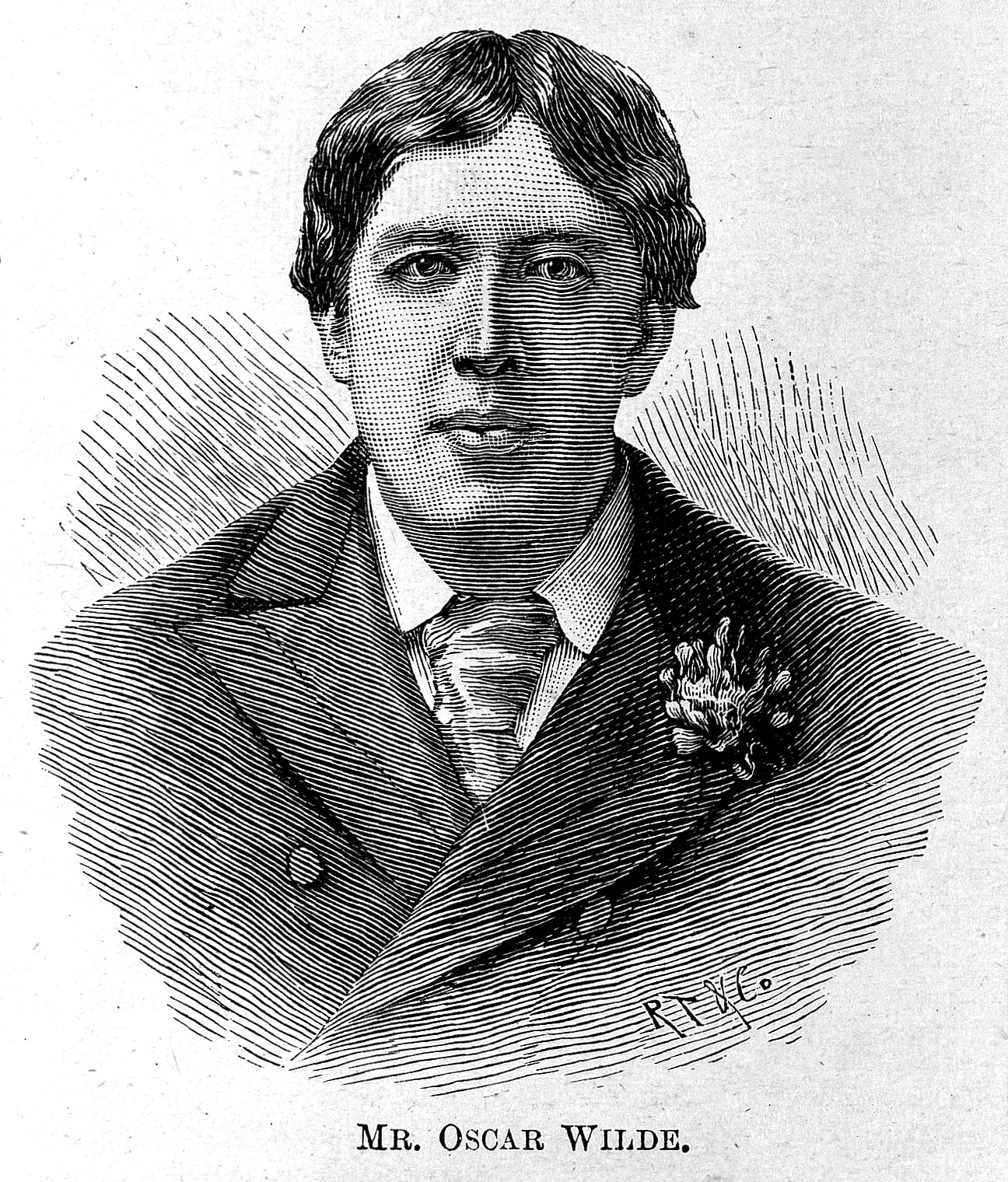
That’s why I got so much out Oscar Wilde’s The Ballad of Reading Gaol.  Wilde got 2 years in custody for his participation in a homosexual prostitution ring.  In other words, mid-term on a vanilla California felony.  Many thought it was an unfair sentence at the time, and today much of what Wilde did is legal.  He says,

I know not whether Law be right,
Or whether Laws be wrong;
All that we know who lie in gaol
Is that the wall is strong;
And that each day is like a year
A year whose days are long.

It’s hard not to read the poem without thinking that Wilde should not have been there in the first place.  And since the poem is written in the first person, with Wilde talking directly to you, it is difficult not to confront him and his experience.  In other words, it’s impossible not to think about what it would have been like for him during his two years.

This too I know – and wise it were
If each could know the same –
That every prison that men build
Is built with bricks of shame,
And bound with bars lest Christ should see
How men their brothers maim.

Wilde cannot be written off as evil, or stupid, or as a different type of person, the type that goes to prison.  You can’t say, “I’m not that type” or “that could never happen to me.”  To the contrary, Wilde is almost certainly more intelligent and sensitive than his reader.  His art proves it.  And Wilde was an intellectual, a literary celebrity.  Prison is not exactly an occupational risk for literary types.

The vilest deeds like poison weeds,
Bloom well in prison-air;
It is only what is good in Man
That wastes and withers there:
Pale Anguish keeps the heavy gate,
And the Warder is Despair.

Wilde died from an ear infection that he contracted in custody.  I’d like to return to his poem in a few years, and try to remember it’s lesson.  That prison is a cruel and hopeless place.  And I’d like to let him help me imagine what it is really like to serve those years.  Something I can never fully do, but that his writing my help me get better at.

Annotations

Equal justice under law is not just an empty motto for the prosecutors I’ve met.  That’s why, even though we might consider the individual impact of an offer, most of the time we strive for uniformity in plea bargaining.  Many offices use an “offer sheet” with standard offers for common crimes.  This sheet my even be detailed enough to account for the individual circumstances of some offenses.  For example, it might contain a standard offer for a first time DUI, as well as a standard offer for a second and third time DUI, each a little more serious than the last.

Spoiler alert: it’s pronounced like “jail.”

Michelle Alexander’s Thesis

On page 4 of The New Jim Crow, Michelle Alexander argues that “mass incarceration in the United States had, in fact, emerged as a stunningly comprehensive and well-disguised system of racialized social control that functions in a manner strikingly similar to Jim Crow.”  She “argues that mass incarceration is, metaphorically, the New Jim Crow.”  (Id. at p. 11.)  She describes “mass incarceration as a ‘racial caste system'” consisting of “the larger web of laws, rules, policies, and customs that control those labeled criminals both in and out of prison.”  (Id. at p. 12-13.) Here’s the way people took it:

Jarvious Cotton is a Murderer

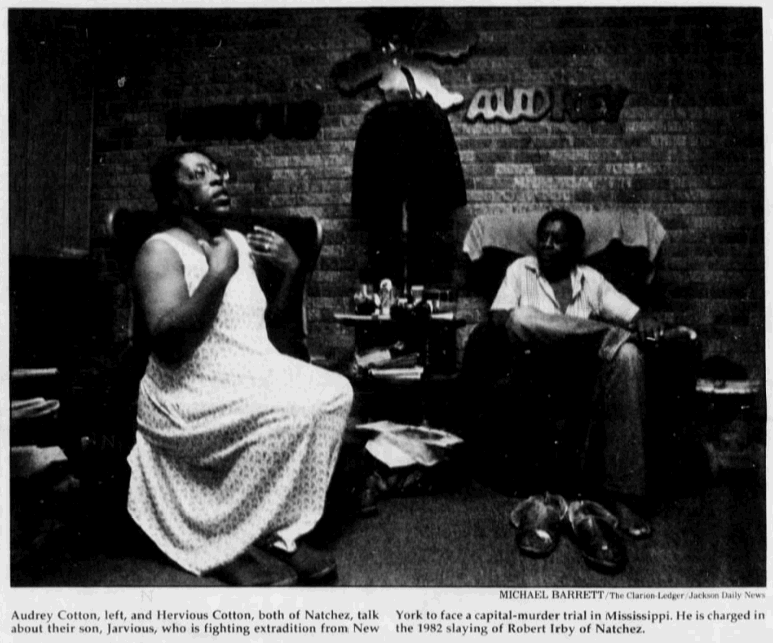
“Today, Jarvious Cotton cannot vote because he, like so many black men in the United States, has been labeled a felon and is currently on parole.”  (Michelle Alexander, The New Jim Crow (2010) at p. 1.)  That is a frustrating and misleading way to start a frustrating and misleading book.  And the worst part isn’t the unnecessary use of the passive voice (Cotton “has been labeled”), and it isn’t the fact that a parolee was denied voting rights.  I hadn’t even thought about the latter much, before picking up this book.  No, it’s Alexander’s characterization of Cotton as having lost his voting rights when someone “labeled” him a felon.

Cotton was not labeled a felon by the establishment, “The Man,” a racist cop, or some other bogeyman.  He committed a felony.  No one did anything to him.  He did it to himself.  He broke the rules and got caught.  Alexander tries to take the focus off Cotton, as if losing his voting rights happened to him in the same way that you happen to get rained on, or in the same way that you happen to catch a cold.  That is just not the case, and it’s a dishonest way to start your book.

What Jarvious Cotton Did to Lose His Voting Rights.  

On March 12, 1982, Robert Irby was with some friends outside the city auditorium in Natchez, Mississippi.  Irby was a popular 17-year-old student football star and the son of a prominent banker.  The Natchez Pilgrimage tableaux was being held.  Irby and his friends were approached by Jarvious Cotton and Terry Johnson.  The two men were friends. “When we was hanging together,” Johnson said, “I put my education with his street knowledge.” Johnson was 15 at the time. He said he was high on marijuana and codeine.

Cotton and Johnson brandished a gun and demanded money.  The men got about $21 from Irby and his friends, and turned to run away.  Irby ran after them.  Cotton turned around and shot Irby dead. According to Johnson, Cotton fired three times. The first two shots hit Irby in the legs. The fatal shot hit Irby below the ear. Cotton said, “He wants to be a hero. There’s another dead soldier.”

Cotton and Johnson fled to a car. The getaway driver was a third man, Anthony Gerald Jackson, who drove them out of state to Louisiana.

Jarvious Cotton’s mother Audrey had ten children. Jarvious was the fourth. He used to run away constantly between the ages of 7-12. He had his first brush with the law at age 17, when he was convicted of burglary. After Cotton killed Irby, he was later caught and held awaiting trial at the Adams County Correctional Center, which is now a private prison.  His mother helped him escape from his cell. He fled Mississippi, but she remained and was later convicted herself, as an accessory to his crime.

He remained a fugitive for five years until he was apprehended almost by accident in New York.  Specifically, he was arrested for marijuana possession¹ in a New York subway.  Officers discovered that he was wanted for murder in Mississippi.

Once Jarvious Cotton was identified as a wanted murderer, Mississippi began proceedings to extradite him.  It may surprise you to learn that the Legal Aid Society of Brooklyn fought on behalf of Cotton to prevent his extradition.  They fought extradition for almost a year before the New York Court of Appeals unanimously held that Cotton must be returned to Mississippi.  Some sources say he was convicted of murder by a jury of his peers. Others say he pled guilty in exchange for a life sentence with the possibility of parole.

Alexander Used Jarvious Cotton to Mislead You.

Cotton lost his right to vote because he killed a teenager.  He did not lose his right to vote because the system “labeled” him a felon.  The New Yorker has the same problem with Alexander’s opening.  The Boston Review sums up my feelings nicely.

“Alexander’s passive construction—Cotton “has been labeled a felon”—suggests that he had no choice in the matter. The compelling arguments against felon disenfranchisement would lose none of their force if Alexander were to acknowledge Cotton’s crime, but she never does.”

Alexander’s language has actually misled people.  Even though we know Cotton was convicted of murder, college students who read this book do not.  For example, students at Cal. State Long Beach were asked to read the introduction and write about it on a message board.  One of them said, “Lastly is Jarvious who is also denied the right to vote because he is on parole for being charged with a drug conviction.”  Nope, he killed a teenager.

If an author cannot be trusted in small things, she probably cannot be trusted in large things either.  If Alexander was willing to try to pass of Cotton as a victim of the system rather than a the worst kind of criminal, what other things is she trying to pass off?  Alexander is a loud voice for sentencing reform.  She should not discredit the arguments of the movement by deceiving her audience about the facts.

Notes and Annotations

Why can’t felons vote? There are good reasons for this rule. In a nutshell, if you aren’t willing to follow the law, you shouldn’t get to make the law for everyone else.

Cotton will vote when he’s off parole: Jarvious Cotton served his time for murder and was released on parole to Adams County Mississippi.  Mississippi denies voting rights to parolees.  But Cotton will regain his voting rights once he completes his term of parole.

California has the same rule as Mississippi: a felon is stripped of his right to vote while she is incarcerated and on parole.  But when the term of parole is complete, her voting rights are returned. People incarcerated in county jail, which includes felons, can vote.

Here’s a newspaper article discussing the case.

Here’s a thoughtful perspective on Alexander’s use of Jarvious Cotton in her argument that the criminal justice system has created a racial case.  Jarvious Cotton chose to commit a crime, whereas slaves and southern blacks during Jim Crow did not choose to be victimized and oppressed.

You can read court opinions about Cotton’s extradition that include the facts of his case. (See People ex rel. Neufeld on Behalf of Cotton v. Commissioner of New York City Dept. of Correction (1988) 71 N.Y. 2d 881 [describing Cotton as an accessory].)

After his conviction, Cotton became a jailhouse lawyer. He sued Mississippi prison officials asking for money to compensate him for having to prove his legal mail did not contain drugs. He sued over a leaky roof, and over the decision to deny him parole. He brought so many bogus suits that the Fifth Circuit barred him from filing more. You can read a detailed account of his life after conviction here.

¹To me, the fact that Cotton was apprehended for possession of marijuana is the most ironic part of his story.  Alexander argues that enforcement of drug laws should be ended, because they are used to create a new racial caste system.  Jarvious Cotton shows that real life does not fit this argument.  Or we can go farther; Alexander’s own examples don’t fit this argument.  Because in Jarvious Cotton’s case, enforcement of a minor drug law led to the apprehension of a murderer.  We could speculate that since Cotton was apprehended on the subway, that he may have been arrested as part of “stop and frisk” enforcement, or broken windows policing.  In other words, the enforcement practices that Alexander criticizes successfully identified and arrested a murderer, an extremely positive result.  And she still turned around and used Cotton as an example in her book, secure in the knowledge that only a tiny number of people would ever care enough to dig deeper.

Too Much Hart

Three years into my job as a prosecutor, I still feel shockingly ignorant about the big picture of criminal law.  I don’t mean the nuts and bolts of doing trials, I’ve figured that out, and I don’t mean criminal procedure and evidence, I’m doing fine there.  What are they saying about the purposes of criminal law?  What are they saying about the fundamentals?

To answer these questions, I’ve been reading The Aims of the Criminal Law by professor Henry Hart.  Written as “a revision of a mimeographed note” in 1958, professor Hart formulates the basic purposes of criminal law for the layman.  (HartThe Aims of Criminal Law, 23 Law & Contemp. Probs. 401 (Summer 1958).)  It was “originally prepared for first-year law students to serve as a supplement to other materials.”  Professor Hart describes it as “being elementary” and ” not attempting a comprehensive examination of competing views of the criminal law.”  (Ibid.)

Hart was from Butte Montana, a mining town.  He left to get his undergraduate degree at Harvard in the 1920s, when the town was almost completely owned by the Anaconda Mining Company.  He attended Harvard as an undergraduate and a law student, where he was president of the Harvard Law Review.  In the 1930s he even received two post-law school degrees, an L.L.M. which I’ve heard of and S.J.D which I have not.  That gave him three Harvard law degrees, making him the most Harvard-y person I’ve ever read about.  Hart was a fixture at the law school until his death in 1964, just 6 years after publishing this article.   The text became famous: enough people have read it to publish a book of reactions to it.  The book appears when you look through Amazon’s criminology section.  That’s how I first learned of the article, which I found with google.

Hart looks at the aims of criminal law from the perspective of each of the institutions involved.  I’m slowly reading the article, but I couldn’t help but skip ahead to the section discussion prosecutors, who are lumped in by Hart with the police.  Hart has a startlingly negative view of prosecutors, to say the least.

Hart starts by noting that prosecutors and police “have a lesser role” than others, but nevertheless, we should understand them in order to “better control their activities” and to educate the legislature about “what responsibilities ought to be given them and of the consequences of unwise imposition of responsibility.”  (Ibid a p. 428.)  Specifically, Hart worries about prosecutorial discretion, because it is “far greater than that trusted to any other kind of official.”  This discretion, he says, leads to unequal enforcement of the law, as prosecutors choose who to prosecute and who to pass over.  This transfers “from the legislature to enforcement officials the de facto power of determining that the criminal law in action shall be.”  (Id.)

Prosecutors should be confined to prosecuting truly serious crimes, which he calls “securing compliance with […] the basic obligations of responsible citizenship.”  By prosecuting only serious crimes, the prosecutor’s “discretion will tend to be reduced o the minimum which the necessities of the administration of law admit.”  In other words, the prosecutor should only prosecute crimes that are so serious that there can be no reasonable disagreement over whether they warrant prosecution.  Any prosecutor who takes her job seriously must prosecute these types of crimes.  The absence of choice in this way is the absence of discretion.  Hart suggests that the proper role of discretion is to make judgments “concerning the sufficiency of the evidence to warrant further investigation or formal accusation, what charges to make, what pleas to accept, what penalties to ask for, and the like.”  (Id.)

Having now warmed up to his theme by arguing that prosecutors have usurped the power of the legislature, and that their broad discretion should be reduced to a minimum, Hart brings out the big guns.  “The stupidity and injustice of the thoughtless multiplication of minor crimes receives its most impressive demonstration in police stations and prosecutor’s offices.” (Id.)  Prosecutors, faced with limited resources, cannot prosecute everyone who commits a crime.  This renders the legislature’s enactments futile, Hart complains.  Sporadic enforcement, which is how Hart describes the state of things, “has an inescapable residuum of injustice” and entails “unprincipled discretion.”  (Id. at p. 429.)

It gets worse.  The prosecutor is likely to prosecute those she sees as morally blameworthy.  This despite the fact that Hart thinks the legislature intended that all violators be prosecuted regardless of blameworthiness.  This creates blameworthiness as an additional element of the crime.  Yet this cannot be disproven by the defendant, according to Hart.

I haven’t finished the article, but on first blush, it seems that Hart deeply misunderstands the role of prosecutorial discretion.  He clearly favors a system in which the prosecutor’s discretion is reduced to a minimum.  But in such a system, every violation of the law, no matter how technical, is prosecuted.  We could never afford to follow Hart’s advice, of course, since 95% of our cases are not tried but resolved by plea bargain, and prosecution of every guilty person to the exact letter of the law would require in the area of 20 times more prosecutors.  Even if it were administratively feasible, it would not be desirable.  Prosecutorial discretion is used to give victims and defendants a case-by-case look at the requirements of justice.  If a pimp and a prostitute are arrested, it is prosecutorial discretion that allows us to treat the prostitute as a human trafficking victim rather than a criminal.  When an undocumented immigrant commits a minor crime, prosecutors exercise their discretion to charge crimes that will not lead to deportation.  Diversion programs, which are extremely popular today for everyone from drug addicts to veterans and first-time offenders, are an exercise of prosecutorial discretion.  Perhaps Hart thinks we should prosecute a drug addicted veteran with no record that commits a minor crime.  After all, he says the legislature intended that “all violators should be prosecuted, regardless of moral blame.”  (Id. at p. 429.)  Apparently Hart believes that the legislature is unaware of prosecutorial discretion.  Perhaps he thinks they are unaware of the executive branch altogether.  But there are situations where prosecuting everyone regardless of moral blame is not what our communities want.  It would be unjust.

Luckily, Professor Hart was not given discretion to implement his ideas about the role of prosecutors.

232 Burglaries

If you google “individual offense rates”, you’re going to get a lot of basketball statistics.  But the phrase is used in Thinking About Crime, a book I’ve been reading in order to educate myself on criminology.  It’s funny that no formal information about criminology is given to prosecutors in my office.  More time is spent on learning the elements of a crime and practicing trial skills.  Prosecutors are key actors in the criminal justice system, wielding the massive, grinding power of state coercion, faced everywhere with choices that affect years of people’s lives.  This system is studied in detail by academics, economists, statisticians, and others.  But we make our choices with little to no knowledge of criminology, instead relying on our gut feeling, what we have heard from others, rules of thumb, and other unreliable sources.  Judges are the same.

The primary penalty that felony prosecutors impose is state prison.  It is the archetypal consequence for crime.  We send felons there as retribution, to incapacitate them, and for deterrence to other criminals. Retribution seems to many like a fancy way of saying “legitimate revenge.”  To me, it has a dark, primal connotation.  We can’t measure it with statistics.  There is no number showing how many sentence per year result in appropriate retribution.  Deterrence is easier to measure, but still not easy to measure.  “It is the mark of an educated man to look for precision in each class of things just so far as the nature of the subject permits.”

It’s incapacitation that jumped out at me from the pages of Thinking About Crime.  Incapacitation seems capable of measurement.  It is not dark and primal, like state-sponsored revenge, and it is at the heart of our current “mass incarceration” controversy.  Wilson opens the subject with his typical clarity.

“To determine the amount of crime that is prevented by incarcerating a given number of offenders for a given length of time, the key estimate we must make is the number of offenses a criminal commits per year free on the street.”

(Wilson, Thinking About Crime (1975) p. 135.)

“The individual offense rate varied significantly for different kinds of offenders.  For example, it was highest for larceny and lowest for aggravated assault.”  (Wilson, Thinking About Crime (Rev. Ed. 1975) p. 137; citing Alfred Blumstein and Jacqueline Cohen, “Estimation of Individual Crime Rates From Arrest Records,” Journal of Criminal law and Criminology 70 (1979), p. 585.)  In this study, adults who had been arrested at least twice in Washington D.C. committed between nine and 17 serious offenses per year while free.  (Ibid.)  “Serious” in this context means murder, aggravated assault, forcible rape, robbery, burglary, larceny, and auto theft.

The studies cited by Wilson are as old as his book, but he does have some California numbers.  The Rand Group has found that the average California prisoner had committed about 14 serious crimes per year over three years of freedom.  (Peterson & Braiker, Doing Crime (1980) pp. vii, 32.)  The number is shockingly high.  Wilson also uses California statistics to return to one of his favorite themes, that crime may be impossible to prevent.  He points out that Rand also found that if no one were confined in prison, the number of armed robberies in California would be about 22% higher than it is now.  (Ibid.)  I think this might be a low estimate, since it does not account for the effect of deterrence: if prison were taken off the table the streets would be a consequence free environment on the streets.

Many of these statistics rely on interviews with convicts.  A person serving time in California for robbery would on average admit to committing 53 robberies per year free.  Burglars reported committing on average 90 burglaries per year.  (Wilson, Thinking About Crime (Rev. Ed. 1975) p. 137; citing Peter W. Greenwood, Selective Incapacitation (1982) pp. 43-44.)

As I read these numbers, I was blown away by how frequently a criminal would commit crimes.  I was already aware, from sources such as the National Crime Victimization Survey, that most crime goes unreported, and that the vast majority of reported crime goes unsolved.  Those facts tend to imply that a lot of crime is going on out there compared to arrests and convictions.  But it’s one thing to suspect that fact from the aggregate numbers.  It’s another thing entirely to see what each individual is doing.  Especially because I primarily deal with individuals each day: individual cases and individual victims.

Wilson’s discussion of career criminals was particularly sobering.  he points out that average rate numbers are not very useful because a small number of offenders commit a very large number of offenses.  The median number of burglaries committed by the inmates in the Rand study was five per year, but the 10% of inmates who were the highest-rate offenders committed on average of 232 burglaries a year.  The median number of robberies was also about 5 a year, but the top 10% of offenders committed an average of 87 a year.  Incarcerating one robber who was among the top 10% in offense rates would prevent more robberies than incarcerating 18 offenders who were at or below the median.  (Peter W. Greenwood, Selective Incapacitation (1982) pp. 43-44, 46.)

We don’t learn much about criminology in training.  But if we learned the cold hard facts about the poisonous effect that career criminals have in our communities, and the salutary effect of removing them, we might be a little more motivated to go out and get them.  I read RAP sheets.  I read probation reports.  But reading Wilson has taught me the importance of using these things to put the full weight of the power of the state towards incapacitating career criminals.

Notes

Wilson’s numbers, and the numbers he relied upon, are old. Alex Piquero and Alfred Blumstein have newer numbers in their 2007 paper.

Surrounded by the Worst

“Most big city officers see the citizenry as at best uncooperative and at worst hostile.”  That’s a line from Thinking About Crime, which I heard about on a podcast and decided to read.  It’s written by James Q. Wilson, who also wrote my government textbook in high school (and probably yours).  The author is most famous for originating the “broken windows” theory of policing, used by Bill Bratton in several cities.  This theory was famously discussed in Malcolm Gladwell’s The Tipping Point.  But the book has been influential in other ways.  Thinking About Crime was written in 1975, before the “evidenced based policing” movement, and before there was much good data in criminology.  There are a lot of interesting passages in the book, but one in particular spoke to my experience as a prosecutor.

By the nature of his job, the police officer is disproportionately involved with the poor, the black, and the young, partly because young males, especially poor ones, are more likely to be involved in criminal activities and breaches of the peace, and partly because even the law-abiding poor (who are, after all, the majority of the poor) must rely on the police for a variety of services which middle-class families do not require or, if they require them obtain from nonpolice sources.

This explanation for why officers tend to have a negative view of their communities it what we must digest.  Many prosecutors and police, myself included, do not live in the communities that we serve.  This may be a wise choice, given the feelings that our work inevitably produces, or an unwise choice, because the stakes are lower when it’s someone else’s community that you are working with.  For those of us who do not live in the community, our only interaction with it is during the course of our work.  Prosecutors see the citizens of their jurisdiction in court.  Sometimes, they see victims, but overwhelmingly they only see defendants.  Defendants in custody, defendants in the gallery, defendants in the hallways, defendants in the restrooms.  People who do not want to be there.  People who are angry and frightened.  And more than that, people that the police believe have committed crimes.

The point is that prosecutors generally don’t see normal community members; they almost exclusively see the worst people in the community.  It can be tempting to assume that the entire community is like that.  If you never thought about it, you might unconsciously make this kind of assumption.  After all, you drive home at night without any other community contact to change your mind.  Seeing only the community’s criminals, and seeing them in court, at what can reasonably be assumed to be some of the worst moments of their lives, may lead to a misconception about everyone else – those people that don’t have to come to court.

This misconception can be dangerous.  The role of the prosecutor is to punish the wrongdoer, of course, but it is also to protect the community.  We must give all our efforts to this work.  Protecting the community doesn’t just require hard work and legal knowledge, it also requires our compassion for the community.  It requires our sincere desire to help the people we serve.  That compassion can be extinguished and replaced by cynicism if we fall into the trap of believing that the community is like our defendants.  They are not.  On the other hand, our compassion for our communities can be strengthened if we pause to remember that the people outside of our courtrooms, though they may never come through the door and tell us, truly appreciate our swift and competent legal work.  And as bad as it is to deal with some of our defendants in court, it is far worse to deal with them on the street.

Inside Baseball

I’m still reading Ghettoside by Jill Leovy, with a special eye to how the prosecutors handled the case.  Lead prosecutor Phil Sterling initially came to Leovy’s attention when he advocated for the Tennelle case to be handled by LAPD’s Robbery Homicide Division in a way that some considered to be arrogant.  But by the time he starts his opening, he is “disciplined and exhaustively thorough, as if he were reading the table of contents of an academic treatise.”  She describes his self-effacing humor as stemming from this competence.  Practicing prosecutors, Leovy says, must thoroughly prepare their arguments.

On the other hand, when Stirling gets to gang expert Det. Daniel Leon, he is less impressive.  Lean didn’t know that a down-pointing arrow meant “this is our turf,” something Leovy seemed to know.  Leon also didn’t recognize “S.C.” as meaning “South Central.”  Stirling had to tell him.  On first look, it may seem like Leon is not doing a great job as a gang expert.  But a prosecutor should always know the answers to the questions he asks a witness.  And he should make sure the witness does as well.  Stirling should have made sure that Leon knew what these gang marking meant.  He should certainly have reviewed the detective’s testimony beforehand, even though an opinion witness may not be as important to the case as a percipient witness.

Stirling “pounced” on co-defendant Starks during cross-examination, and had an admirable Perry Mason moment when he obtained a hotel receipt to completely discredit Stark’s alibi.  I smiled when I read that “a bunch of DAs” were in the courtroom to see it.  Such a rare moment given modern discovery rules, and so effective.

Leovy described Stirling’s closing as “a tad bathetic” and said he “indulged in prosecutorial cliches.  For example, he held up a gun and yelled “bam, bam, bam” to act out the killer’s motions.  Leovy may not like it, but I have heard the value of this kind of acting is to take the jury out of the sterile environment of the courtroom and remind them that a murder is a terrifying, loud, and violent act.  A slow-moving prosecutor, droning on from behind a podium, might not be able to do that.

Stirling is apparently a big believer in PowerPoint.  “[T]he jurors had endured two weeks of remorseless PowerPoint torture at the hands of the prosecution.”  Although Leovy may disagree, I believe that the use of PowerPoint, particularly to present photographic evidence, is part of Stirling’s project of bringing the crime back to life.  That’s a skill I’d like to learn, and Stirling, in my opinion, is a skilled prosecutor.

Ghettoside

Jill Leovy’s Ghettoside starts out with some pretty grim statistics.  Black men are only six percent of the nation’s population but nearly 40% of those murdered.  They make up 12% of Los Angeles County’s population but account for nearly half its homicide victims.  A total of 186,807 people died from homicides in the United States between 1995 and 2005; of these victims, 89,991 were black, or 48%.  She points out that “[t]he black homicide death rate remained as much as ten times higher than the white rate in 1960 and 1970, and has been five to seven times higher for most of the past thirty years.”

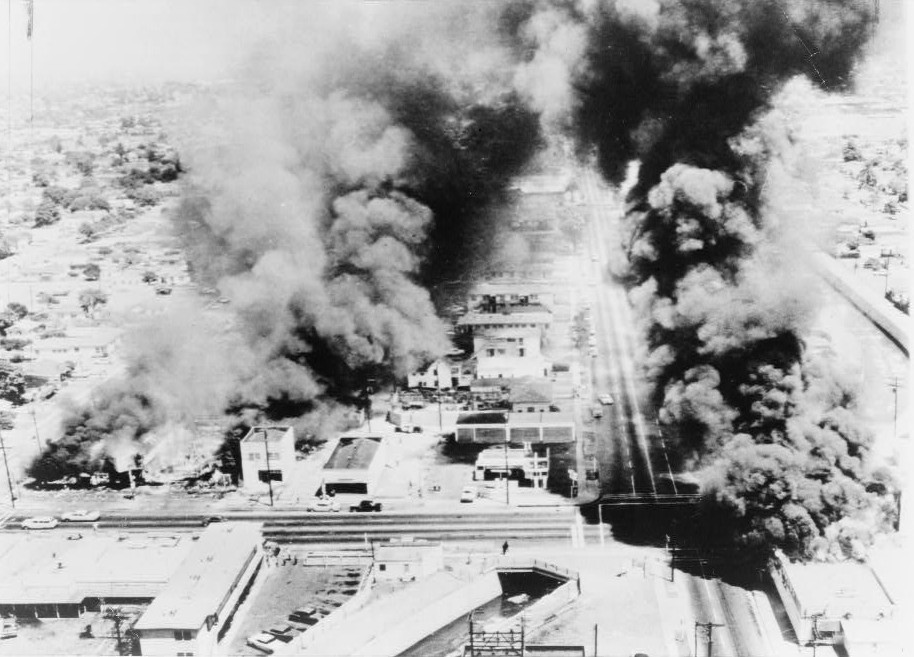
After review these statistics, and many others, she concludes that “for too long black men have lived inadequately protected by the laws of their own country.”  She complains that “the speed and certainty of adequate punishment for the murderers of black men” remains a problem in our criminal justice system.  She decried lawlessness in general in Watts, and other poor black areas of Los Angeles County.  She argues that “gangs are a consequence of this lawlessness, not a cause.”

I picked up Ghettoside and began reading it because of this argument.  I agree that we should reorient the discussion around race towards victims, and talk more about protecting black victims.  Focusing on criminals, rather than victims, may make for better stories, but the big picture can’t be ignored.  And the big picture is the misery created for victims, especially black victims.

I’ve heard mixed things about Ghettoside, but I’m willing to give it a try.  After finishing the first section, I think Jill Leovy does an excellent job marshaling the statistics.  I’m looking forward to the rest.

Annotations

Spoiler alert: they caught the guy who committed the Ghettoside murder.  I liked his closing argument.