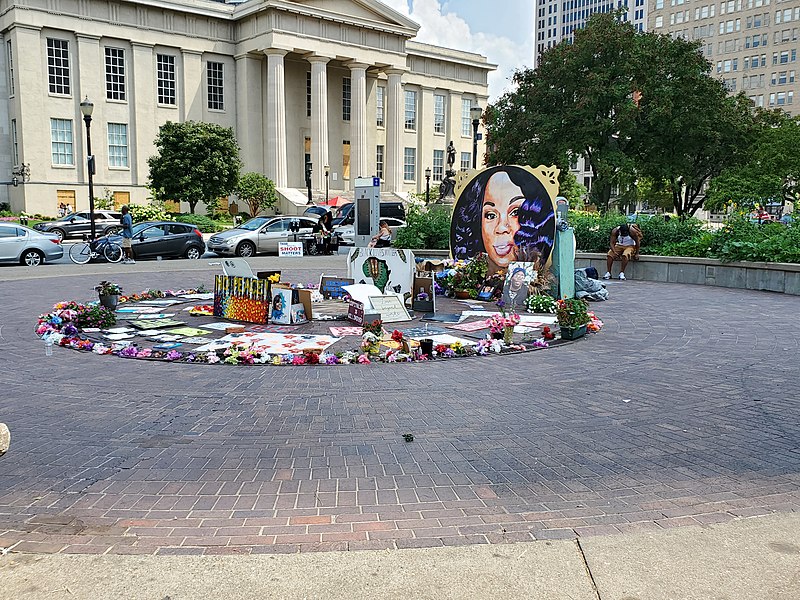
Officers from the Minneapolis Police Department obtained a “no-knock” warrant to search Breonna Taylor’s apartment. It resulted in her death. An officer was shot and another officer shot at an apartment with small children. Some have reported that the officers were not wearing police identifiers on their clothing. They imply that Taylor’s boyfriend, who shot at officers, believed he was legally fighting off a home invader.
This had led to criticism of the practice of using no-knock warrants.
Tonight, I’m thinking of Breonna Taylor’s family who is still grieving the loss of a daughter and sister.
We must never stop speaking Breonna’s name as we work to reform our justice system, including overhauling no-knock warrants.
Why do no-knock warrants even exist? The purpose of no-knock warrants is to prevent the destruction of evidence. They are also used to protect officers in situations where they reasonably believe that suspects will arm themselves. Finally, they are also used in situations where officers believe that that suspects will flee from arrest. (People v. Neer (1986) 177 Cal.App.3d 991, 995.) Under the Fourth Amendment, no-knock entries are justified when police officers have a reasonable suspicion that knocking and announcing their presence before entering would be dangerous or futile, or destructive to the purposes of the investigation. (U.S. v. Banks (2003) 540 U.S. 31, 36-37.) The Fourth Amendment even allows no-knock warrants when there is no existing exigency, but the officer expects that there will be exigency when a knock is made. With this many exceptions, you may wonder whether the Fourth Amendment even exists at all anymore.
But just because the Constitution allows no-knock warrants doesn’t mean that the states have to allow them. After all, in theory, the Constitution provides the floor for protection of constitutional rights, and states are free to be more protective if they want. That’s what California decided to do.
No-knock warrants are illegal in California.
Here, a magistrate may not issue a no-knock warrant. (Pen. Code, § 1531.) Although that wasn’t always the case. In 1872, 12% of all search warrants in Los Angeles County were no-knock warrants. (Parsley v. Superior Court (1973) 9 Cal.3d 934, 939-40). In Parsley, officers believed that there were drugs in a house, and obtained a no-knock warrant. (Id. at 938.) They had been told that the resident was known to answer the door armed with a weapon. (Id. at p. 941.) They crawled through a bedroom window without giving notice of their authority or purpose. They found narcotics and two men, who were both arrested. (Id.) The men complained that the officer shouldn’t have been allowed to crawl in, and they asked that the court throw out the drugs they found. The California Supreme Court agreed, relying on Penal Code section 1531. (Id. at p. 939.)
But there are still ways police can enter your house without knocking.
Don’t forget that officers can still enter your house without knocking if there is exigency existing when they arrive. (Parsley, supra, at p. 939.) It’s just that a judge can’t make that determination in advance: it has to be made by police on the scene. Police can also enter if the search is of a public place. This usually happens when police are searching stores or restaurants. Finally, if the occupant of the home agrees to allow the search, by letting police in before they can knock, or by waiving his rights before the search starts, police don’t have to knock.
Qualified immunity is a defense against civil lawsuits over money. It gives police officers partial immunity in civil court, not in criminal court, which has a different set of rules. It also cannot protect police officers from administrative discipline, including termination.
Qualified immunity was first invented by the Supreme Court in Pierson v. Ray (1967) 386 U.S. 547. It’s only about 50 years old. It gave officers immunity from money damages when they were acting with “good faith and probable cause” in making arrests. The Court has tinkered with the definition over the years, after all, they made it up in the first place, but the point has remained the same: police shouldn’t have to pay damages for violating rights when they were acting in good faith. Acting in good faith means that an officer must not intend to violate the constitution. But the constitution is interpreted in different ways over the years. What is constitutional today may be unconstitutional tomorrow. For example, it used to be constitutional to question a suspect without a Miranda warning. Then one day it wasn’t. Should a criminal be able to sue for failure to give the Miranda warning before the Miranda case was decided by the Court? Of course not, how could the officer know he was violating the constitution? The Supreme Court has argued with itself over what it means to act in “good faith” when constitutional law is unclear.
Today, qualified immunity is available if a reasonably well-trained officer would not know that her precise conduct would run afoul of that principle and violate the plaintiff’s rights. (Anderson v. Creighton (1987) 483 U.S. 635.) That’s what good faith means now. Reasonably trained officers don’t have to be constitutional scholars, as long as they are not deliberately violating the constitution.
With qualified immunity the police can sue you but you can't sue them. https://t.co/AnviVgxmPE
One example is the Miranda example above. Here’s another example of how this works. In 1983, an FBI agent conducted a warrantless search of a home. They wrongly believed that a bank robbery suspect on the run might be in the house. In this circumstance, a search is allowed under the exigent circumstances exception to the Fourth Amendment. The family that lived in the house sued, claiming that their Fourth Amendment Rights were violated. The officer responded, even if they were, I didn’t intend to violate your rights, and a reasonable officer would have believed this was a perfectly fine “exigent circumstances” search. The Court held that the officer was right, he could not be sued. (Anderson v. Creighton, supra.)
Are we not going to sue the police force for attacking harmless protesters? #EndSarsNow
Here’s another example. Today, it is legal for a police officer to use force to overcome a suspect’s resistance or to gain compliance with a lawful order. Imagine that an officer at a protest lawfully orders protesters to go home. One protester doesn’t go home, and an officer uses force to get him to comply with the dispersion order. The protester sues the officer. At the time of the protest, what the officer did was legal. But while the protesters case was pending, the Supreme Court rules that force cannot be used to enforce a dispersion order: a new rule of law. Since it’s new, the officer could not have known about this rule and thus couldn’t comply with it. The officer should get qualified immunity because he was acting in good faith.
What Qualified Immunity Isn’t
If an officer uses force against you, and you are prosected for battering the officer, you can always claim excessive force as a defense. Qualified immunity doesn’t enter into the picture. In fact, it is not relevant in criminal proceedings at all.
Qualified immunity doesn’t protect an officer from internal discipline. It can’t prevent an officer from being fired. It can’t prevent a citizen complaint.
Finally, qualified immunity doesn’t protect officers who violate the constitution in bad faith. In the excessive force example above, the officer would not get qualified immunity because the case law is clear that excessive force violates the Fourth Amendment. Virtually all of the rights that you think of, like the Miranda right or the Massiah right. Qualified immunity is a narrow form of immunity that protects officers when the law is changing or unclear.
The prosecutor has more control over life, liberty, and reputation than any other person in America.
– Robert Jackson, United States Attorney General, Justice of the United States Supreme Court, and Chief United States Prosecutor at the Nuremberg Trials.
The public prosecutor was a uniquely America invention. Although we borrowed much of our law from England, criminal prosecutions there were generally conducted by the victims, in tandem with tort suits against hte perpetrator of the harm. A public prosecutor prevents blackmail by the victim, who in early England could, and often did, threaten criminal prosecution unless the defendant paid a settlement in the tort suit. A public prosecutor prevents the criminal courts from being used as conduits for unreasonable, vengeance-seeking victims (or their survivors) who are incapable of neutrally assessing the defendant’s criminal responsibility. It also means that poor victims will have their rights protected even if they could not afford the costs of prosecution. And it ensures that public money is only spent on crimes that the public feels are important, and not on private disputes.
John Pfaff thinks that prosecutors, because of their power, are the primary driver of mass incarceration in America. He argues that prosecutors are responsible for rising prison populations during a period of falling crime.
What appears to happen during this time—the years I look at are 1994 to 2008, just based on the data that’s available—is that the probability that a district attorney files a felony charge against an arrestee goes from about 1 in 3, to 2 in 3. So over the course of the ’90s and 2000s, district attorneys just got much more aggressive in how they filed charges. Defendants who they would not have filed felony charges against before, they now are charging with felonies. I can’t tell you why they’re doing that. No one’s really got an answer to that yet. But it does seem that the number of felony cases filed shoots up very strongly, even as the number of arrests goes down.
Pfaff advocates reform by electing new district attorneys.
What makes it very hard is that the person we really need to target now—whose behavior we need to regulate—is the district attorney, and the district attorney is a very politically independent figure. He’s directly elected, and he’s directly elected at the county level. […] So you have to figure out how to go county by county and either elect DAs who have less punitive attitudes, or you can try to sort of change the incentives DAs face at the state level. But it’s very tricky.
Pfaff’s work was a response to a National Research Council report. The report was conceived by James Q. Wilson, an extremely influential thinker in criminology. It lists the underlying causes of incarceration as “crime, politics, and social change.” It found that “[t]he policies and practices that gave rise to unprecedented high rates of incarceration were the result of a variety of converging historical, social, economic, and political forces.” The system was made punitive by “powerful institutional, cultural, political, economic, and racial forces.” “[T]he United States responded to escalating crime rates by enacting highly punitive policies and laws and turning away from rehabilitation and reintegration.”
Pfaff had a strong reaction to this report. He began writing about what he believed were flaws in the report. His writing started to pile up. And it eventually led to his book, Locked In.
Pfaff is making a diagnosis of exclusion. He isn’t sure why prison populations have risen, but he noticed that more arrests are resulting in prosecution. So he identifies the rise in prosecution as the cause of mass incarceration. This is not proof by a long shot; it’s more like an educated guess. When more research is needed, academics shouldn’t publish books acting as if the question is settled.
The second problem that I have with Pfaff’s thesis is that he doesn’t know why prosecutors are filing more. Personal experience leads me to believe that prosecutors offices are chronically short-staffed, and that the filing decisions of the past were driven by the very real limitations of staffing. In the old days, prosecutors had to decline cases because they did not have the resources to prosecute them. As time has gone on, prosecutors have obtained more staff and resources, and can prosecute more. And they should, after all, one of our guiding principles is “equal justice under law.” Imagine how a victim feels when a prosecutor tells them that they do not have time to prosecute their victimizer. As we move away from a history of unequal enforcement to a period of equal enforcement against all criminals, Pfaff should not complain that prosecutor’s filing decisions are causing mass incarceration. After all, prosecutors are simply living up to our ethical ideals, and doing more of the work that we are entrusted with.
Atlanta police officers walked off the job on June 17 to protest the prosecution of Officer Garrett Rolfe. “The union, we would never advocate this. We wouldn’t advocate a blue flu,” a union representative said. “We don’t know the numbers. Apparently we’re learning that command staff are asking outlying counties for support and aren’t getting it.” A department spokesperson said, “the department is experiencing a higher than usual number of call-outs with the incoming shift.”
What Happened?
The call-outs occurred in the area of the June 12 shooting of Rayshard Brooks by Officer Rolfe. Brooks was drunk in his car. Officers attempted to arrest him. He violently resisted, stole a taser, and punched officers before running with the taser. He turned to shoot the taser at the officer, who shot him with a handgun. The shooting was recorded by several cameras and was broken down in the video below.
Protesters believe that the shooting was unjustified because Brooks was running away. The death sparked protests in the city and led to Police Chief Erika Shields’ resignation less than 24 hours later. Police believe that the shooting was justified because of Brooks’ violent resistance and taser use. Rolfe’s record also shows an additional use-of-firearms incident, in 2015, without note of any disciplinary action.
Officer Garrett Rolfe was fired and charged with felony murder. In fact, Fulton County District Attorney Paul Howard charged Rolfe with a total of 11 counts, including aggravated assault with a deadly weapon. The felony murder charge carries a possible death sentence or life in prison. Aggravated assault can come with a penalty of up to 20 years.
Police in Atlanta Go on Strike
Hours after the charges were announced, some Atlanta police officers began calling in sick just before their night shifts started. “This is not an organized thing, it’s not a blue flu, it’s not a strike, it’s nothing like that,” Vince Champion, a spokesman for the International Brotherhood of Police Officers, told NBC News. “What it actually is is officers protesting that they’ve had enough and they don’t want to deal with it any longer.” The “blue flu” describes a situation when a large group of officers simultaneously call in sick. It is not a formal strike, but accomplishes the same result.
“Blue Flu” Police Strikes are Illegal in Georgia
It is illegal for police to go on strike in Atlanta. Title 45, Chapter, 19, Article 1 of the Georgia Code governs strikes by public employees. Section 2 is titled, Public employees not to promote, participate in, or encourage strikes.” It reads, “[n]o public employee shall promote, encourage, or participate in any strike.” It is not a complicated law. Section 3 forbids supervising personnel to “authorize, approve, or consent to a strike.”
The punishment for violating this section is harsh. Violators “shall forfeit his or her civil service status, job rights, seniority, and emoluments, if any.” O.C.G.A 45-19-4 (2010). Moreover, anyone fired for striking cannot be rehired for three years. If a violator is rehired, they are at will for five more years.
The Georgia Code also criminalizes people who encourage public employees to strike, whether or not those people are public employees themselves. “Any person who is not a public employee and who shall knowingly incite, agitate, influence, coerce, persuade, or picket to urge a public employee to strike shall be guilty of a misdemeanor.”
Every Department, not just Atlanta PD, should have #BlueFlu. No more of this. No more attacking our cops. Reform the criminals. #IStandWithPolice.
The Georgia State University Law Review has an article explaining how this law was passed. The rationale applies squarely to the “blue flu” protests today.
In 1997, the City of Atlanta School Board chose not to award salary increases to most “classified employees,” such as school bus drivers, cooks, and custodians, after it conducted a study concluding that Atlanta’s classified employees were earning more money than many of their suburban peers. On September 10, 1997, 204 of the 317 school bus drivers employed by the City of Atlanta called in sick to retaliate against the School Board’s decision to withhold raises that year.
In other words, school bus drivers retaliated against the School Board in the same way that police officers are now retaliating against the district attorney’s office.
The strike left thousands of children stranded on street corners. Some [students] waited for nearly two hours for bus drivers to make extra runs to pick them up.
Furious legislators learned that the strike was legal. There was no way for them to force the bus drivers back to work. Representative Earl Ehrhart said, “this is the perfect example of why [public employees] are not allowed to strike. [The danger to the children] was frightening.” Representative H. Doug Everett said, “We don’t want police, firemen, public safety workers, or even trash patrol workers to strike …. Their jobs are vital. They have people in the palms of their hands. People in those positions should not be able to endanger the safety and welfare of other citizens.”
What About California?
The California Supreme Court has held that strikes by nonessential employees are generally legal, except in cases where the strike poses an “imminent threat” to public health and safety. (County Sanitation District No. 2 of Los Angeles County v. Los Angeles County Employees Association (1985) 38 Cal.3d 564, 586.) This was a change to the former rule that all public-employee strikes were illegal. (Id. at p. 585.) However, this did not legalize strikes by police. The court “immediately cautioned […] that the right of public employees to strike is by no means unlimited.” (Id.) The court used the following standard:
“Strikes by public employees are not unlawful at common law unless or until it is clearly demonstrated that such a strike creates a substantial and imminent threat to the health or safety of the public.”
(County Sanitation District, 38 Cal.3d at p. 586.)
Public employees, “such as firefighters or law enforcement personnel, whose absence from their duties would clearly endanger the public health and safety,” still cannot strike. (Id. at p. 586-587.)
Blue Flu Police Strikes are Immoral
The Georgia Legislators are right about bus drivers and they are right about police officers. The jobs they hold are too important to the public to be withheld in a labor dispute. If you don’t like what your boss is doing, you can’t endanger public safety to get your boss to change. If a policeman doesn’t like the charges brought by the DA, they can’t stop patrolling until he changes his mind. The people hurt by police strikes are innocent. They paid for a public service that they are not getting. Why? Because the person they paid wants to leverage their suffering in some way. In this case, some officers in Atlanta want to leverage the suffering of Atlanta crime victims in order to save their fellow officer from prosecution. That is easy to understand and obviously wrong.
So lemme get this straight.. @Atlanta_Police in protest walk off the job setting up a de facto “Antifa” zone in #atlanta and that is ok, but the #Antifa protest zone in Seattle is wrong? Got it. 🤷♂️🤦♂️For the record, I think both are wrong. #Dissonance#BlueFlu#atlantapolice
Police know that they are forbidden from striking. And even thinking about this issue for a few minutes would be enough for them to understand the rationale. That’s why the phrase “blue flu” is going around. They want to strike anyway, even though they know it is illegal. But to admit they are striking is to admit they are breaking the law. So they are using a euphemism. “We are not striking, we just all have the flu at the same time.” It is dishonest.
That’s what bothers me the most about this situation. Breaking the law bothers me, of course, I’m a prosecutor. Breaking the law when you are supposed to be enforcing it bothers me even more, it’s hypocrisy and betrayal. And then lying about the fact that you are breaking the law you are supposed to enforce is the icing on the cake.
Matthew Yglesias has a piece in Vox titled, “The Case for Hiring More Police Officers.” In it, he sets forth a liberal rationale, not for defunding the police, but for doing the opposite. It is thoughtful and logically written. Yglesias also makes the point that hiring more police would do more than reduce crime; it would also be politically savvy for liberal politicians. His colleague German Lopez has written about President Trump’s efforts to defund the police. Both are worth a read.
The Idea Is Popular
Yglesias wrote his piece in February of 2019, after Black Lives Matter became a movement, but before the death of George Floyd. He cited several studies showing the idea was popular at that time, both with Americans in general and with the black community. But would it still be popular now? A June 9-10 2020 YouGov poll still shows that only a tiny fraction of Americans want to cut police funding. When asked, “do you favor or oppose cutting funding for police departments?” The responses were favor 25%, oppose 53%. In other words, cuts are opposed by a majority of Americans. Only 24% of Americans agreed with the statement “[p]olice reform hasn’t worked. We need to defund police and reinvent our approach to public safety.” Only 33% of blacks agreed with that statement. The poll is a treasure trove of data on criminal justice: you should read it if you have time.
The Cato Institute has also done recent polling on this issue. You can read the details in their article, “Americans Don’t Want to #Defund the Police, Instead They Agree on Reform. The title says it all. They go on: “[i]t’s also useful to keep in mind that few Americans of any racial group support some of the more radical changes demanded by some activists. For instance, few people support calls to abolish or defund the police: 9 in 10 black, white and Hispanic Americans oppose reducing the number of police officers in their community—and a third say their community needs more officers…”
Camden, New Jersey Is Actually an Example of Funding the Police
Much has been written about Camden, New Jersey, a town that “defunded” it’s police department. “Defund” never means defund in these conversations. What Camden actually did was increase the number of police on the streets. They replaced the city police force with a county force. “The new county force is double the size of the old one.”
Joe Biden and Bernie Sanders Want to Fund the Police
Joe Biden seems to agree. In an opinion piece in USA Today, he wrote, “I’m proposing an additional $300 million to reinvigorate community policing in our country. Every single police department should have the money it needs to institute real reforms like adopting a national use of force standard, buying body cameras and recruiting more diverse police officers.” More police officers is not defunding the police, obviously.
Everyone: “Defund the police!”
Joe Biden: I hear you. I will put more money in de fund for the police
Bernie Sanders agrees. ““I think we want to redefine what police departments do, give them the support they need to make their jobs better defined,” said Sanders. On June 2, he told Sen. Chuck Schumer that “we need to enhance the recruitment pool by ensuring that the resources are available to pay wages that will attract the top tier officers we need…”
Finally…
We should remember that there is also a moral case for funded, effective police. Here’s a story from Reddit that illustrates this well.
I believe law enforcement overwhelmingly attracts people who want to do good for a living—people who risk their lives because they want to help other people. They don’t sign up to be cops in New York or Chicago or L.A. to help white people or black people or Hispanic people or Asian people. They sign up because they want to help all people. And they do some of the hardest, most dangerous policing to protect people of color.
Comey described the birth of the myth of racist policing as follows. Many police officers work in places where a huge proportion of street crime is committed by people of color. These officers learn from those experiences and begin to be more suspicious of people of color than similarly situated white people. Comey, and others, have defended this behavior as “maybe even rational.” For example, New York City is 25% black. Yet blacks were the victims of 55% of the city’s murders and 61% of the suspects, according to the NYPD. Others cite even more disturbing statistics.
I think this may be the birth of things like bias and racial profiling. And certainly, there are racist cops, just like there are racists in every profession, although the power police wield makes it much more important to root out individual racist cops. But calling all police racists, or calling police racist as an institution, is inaccurate. It does nothing to help crime victims and certainly nothing to improve policing.
Black Cops Agree
Comey is white, but his view is not limited to white people. Bernard Parks, the first black police chief of Los Angeles, said that racial disparities resulted from the choices of criminals, not police bias. “It’s not the fault of the police when they stop minority males or put them in jail. It’s the fault of the minority males for committing the crime. In my mind it is not a great revelation that if officers are looking for criminal activity, they’re going to look at the kind of people who are listed on crime reports.” Charles Ramsey became chief of police in Washington D.C. in 1998. He said, “not to say that [racial profiling] doesn’t happen, but it’s clearly not as serious or as widespread as the publicity suggests. I get so tired of hearing that ‘Driving While Black’ stuff. It’s just used to the point where it has no meaning. I drive while black – I’m black. I sleep while black too. It’s victimology.”
Many Disagree
Paul Butler, writing in the Guardian, says, “The US criminal legal process is all about keeping people – especially African American men – in their place.” This ignores the fact that “the lifetime risk of incarceration skyrocketed for African American male high school dropouts with the advent of mass incarceration, it actually decreased slightly for black men with some college education” according to James Forman Jr.’s book, Locking Up Our Own. This suggests that policing is related to class, not race. Radley Balko, writing in the Washington Post, wrote an opinion with the headline, “There’s overwhelming evidence that the criminal-justice system is racist.” He has a lot of links, and I’m looking forward to going through them. Only a few paragraphs in, however, he changes the definition of racism to fit his argument. To him, systemic racism means, “we have systems and institutions that produce racially disparate outcomes, regardless of the intentions of people who work within them.” That’s not what “racist” means to most people.
What is Systemic Racism
A dictionary is a repository of agreed-upon definitions of words. It reflects the concepts that people understand when words are used. You may use “up” to mean “down” and “hot” to mean “cold”. You can create your own private definitions of words. But when you use these words in public, especially in a newspaper article or other writing intended for public consumption, you cannot create your own private meaning. If you say the sky is down and snow is hot, you are not being accurate, regardless of your private definitions.
We see this problem with the phrase “systemic racism.” According to Wikipedia, the phrase was coined by activists in the 1960s, but it does not provide their definition. Wikipedia’s first “definition” of systemic racism is taken from a British judge, and differs from Balko’s definition above and the dictionary definition below. Then the article provides a second definition, “differential access to the goods, services, and opportunities of society.” Later, the article has a third definition by Professor James M. Jones. It is remarkable that an encyclopedia article on systemic racism can’t even agree with itself about what the terms mean.
When no one can agree on a definition, we must ask ourselves what a reasonable person hearing the words “systemic racism” will understand them to mean. Luckily, we have agreed-upon definitions of these words in the dictionary.
The Oxford Dictionary defines racism as “prejudice, discrimination, or antagonism directed against someone of a different race based on the belief that one’s own race is superior.” A system is a set of things working together as parts of a mechanism or an interconnecting network; a complex whole. Systemic racism, therefore, is a set of things working together with prejudice, discrimination, or antagonism against someone of a different race based on the belief that one race is superior.
Merriam Webster’s definition of racism is similar. Until June 10, 2020, when they changed it to support those who argue that systemic racism exists. The definition was explicitly changed to support this position. The change was requested by a 22-year-old college student who “noticed in discussions about racism that white people sometimes defended their arguments by cutting and pasting the definition from the dictionary.”
Someone wondering if there is systemic racism in policing may not know which of the definitions to go with. They may not know that some have changed the definition to support their political positions. And how many people will hear the phrase “systemic racism” and even look it up in the first place? Most people will simply apply the common meaning of each of those words to the concept. When someone like Balko says there’s systemic racism in policing, most people will understand him to mean that police work with prejudice, discrimination or antagonism against someone of a different race based on the belief that their own race is superior. After all, that is the definition of the words. The problem is, that isn’t true. Balko and others call the system racist, and when it turns out that the definition of “racist” is not met, they respond that they weren’t using that definition. This bait and switch is dishonest. Don’t forget that calling someone (or some system) racist is an extremely serious accusation. Being a racist is one of the worst things a person can be in today’s society. Supporting a racist system is even worse. Yet some accuse people and the systems they work in of being racist all the time. It shouldn’t be done, especially when the accuser is using a made-up definition of racism in the first place.
In the wake of the murder of George Floyd, many people have proposed radical reforms of the police. One of the most radical things that we can do is to bear in mind the original purposes of police.
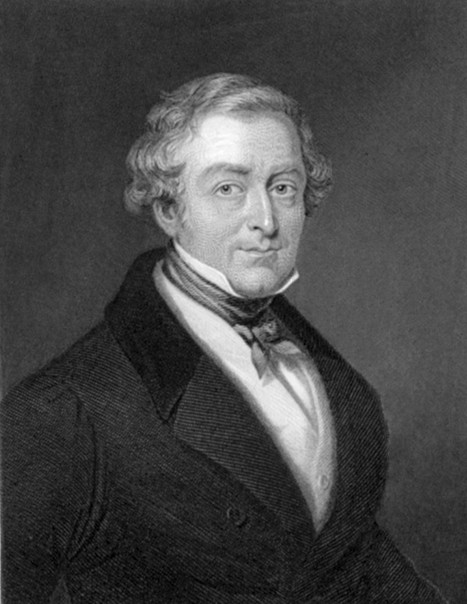
British police officers are called “Bobbies” after Robert Peel, who established the London Metropolitan Police. Peel developed the idea of police officers as “citizens in uniform.” Peel had 9 principles of policing issued to every new police officer from 1829 onward. They are still on the government’s website. They are:
To prevent crime and disorder, as an alternative to their repression by military force and severity of legal punishment.
To recognise always that the power of the police to fulfil their functions and duties is dependent on public approval of their existence, actions and behaviour, and on their ability to secure and maintain public respect.
To recognise always that to secure and maintain the respect and approval of the public means also the securing of the willing co-operation of the public in the task of securing observance of laws.
To recognise always that the extent to which the co-operation of the public can be secured diminishes proportionately the necessity of the use of physical force and compulsion for achieving police objectives.
To seek and preserve public favour, not by pandering to public opinion, but by constantly demonstrating absolutely impartial service to law, in complete independence of policy, and without regard to the justice or injustice of the substance of individual laws, by ready offering of individual service and friendship to all members of the public without regard to their wealth or social standing, by ready exercise of courtesy and friendly good humour, and by ready offering of individual sacrifice in protecting and preserving life.
To use physical force only when the exercise of persuasion, advice and warning is found to be insufficient to obtain public co-operation to an extent necessary to secure observance of law or to restore order, and to use only the minimum degree of physical force which is necessary on any particular occasion for achieving a police objective.
To maintain at all times a relationship with the public that gives reality to the historic tradition that the police are the public and that the public are the police, the police being only members of the public who are paid to give full-time attention to duties which are incumbent on every citizen in the interests of community welfare and existence.
To recognise always the need for strict adherence to police-executive functions, and to refrain from even seeming to usurp the powers of the judiciary, of avenging individuals or the State, and of authoritatively judging guilt and punishing the guilty.
To recognise always that the test of police efficiency is the absence of crime and disorder, and not the visible evidence of police action in dealing with them.
New York City Police Commissioner William J. Bratton said, “I carry these with me everywhere. My bible.” The New York Times was moved to do an extensive article on Bratton and his love of Peel. Unfortunately, he is not immune from the present moment.
I don’t need to know much about George Floyd to be horrified by his murder. I can’t shake the image of Floyd calling out to his dead mother as he was strangled. But if we are holding up Floyd as a rallying cry for reform, then we do need to know about him. The information we need about Floyd is how his life was affected by the criminal justice system. The most important fact is that he was murdered by a policeman. But the rest of his life can teach us important things too, and might make us a little bit uncomfortable.
I recently read a New York Times article about the life of George Floyd. It went into granular detail about his exploits in sports, at work, and in religion. We found out about why he moved to Minneapolis from Houston. We found out about his propensity to hug people. We heard from an NBA star that he physically resembled. He had never been in a fight. He told jokes to cheer up his teammates after a loss. But the article totally passed over his involvement in the criminal justice system. This left me puzzled, since his involvement in the criminal justice system is the reason for his notoriety. Moreover, he is being held up as an example of why we need to reform the criminal justice system. Given that, readers need a complete picture.
The New York Times Passes Over Floyd’s Criminal History
But he returned to Texas after a couple of years, and lost nearly a decade to arrests and incarcerations on mostly drug-related offenses. By the time he left his hometown for good a few years ago, moving 1,200 miles to Minneapolis for work, he was ready for a fresh start…
For about a decade starting in his early 20s, Mr. Floyd had a string of arrests in Houston, according to court and police records. One of those arrests, for a $10 drug deal in 2004, cost him 10 months in a state jail.
Here’s a summary from the Daily Mail. “Floyd was sentenced to 10 months in jail for having less than one gram of cocaine in a December 2005 arrest. Ok, so far the Times is doing fine. “He had previously been sentenced to eight months for the same offense, stemming from an October 2002 arrest.” The Times omitted this. “Floyd was arrested in 2002 for criminal trespassing and served 30 days in jail.” Omitted. “He had another stint for a theft in August 1998.” Also omitted. What is lost in these omissions is the implication that Floyd might have been a cocaine addict in the early 2000s.
The New York Times Omits the Facts of Floyd’s 2007 Armed Robbery
This is the most frustrating part: “Four years later, Mr. Floyd pleaded guilty to aggravated robbery with a deadly weapon and spent four years in prison.” That’s the only thing the article said. They complete omit what actually happened. Court documents detail the facts of the assault:
Here’s The Daily Mail again. Compare the detail provided here with the detail provided by the Times.
“Floyd pleaded guilty to the robbery where another suspect posed as a worker for the local water department, wearing a blue uniform in an attempt to gain access to the woman’s home… But when the woman opened the door, she realized he was not with the water department and attempted to close the door, leading to a struggle. At that time, a Ford Explorer pulled up to the home and five other males exited the car and went up to the front door. The report states the largest of the group, who the victim later identified as Floyd, ‘forced his way inside the residence, placed a pistol against the complainant’s abdomen, and forced her into the living room area of the residence. ‘This large suspect then proceeded to search the residence while another armed suspect guarded the complainant, who was struck in the head and sides by this second armed suspect with his pistol while she screamed for help.’ Not finding any drugs or money at the house, the men took jewelry and the woman’s cell phone and fled in their car. A neighbor who witnessed the robbery took down the car’s license plate number. Later, police tracked down the car and found Floyd behind the wheel. He was later identified by the woman as the large suspect who placed a gun against her stomach and forced her into her living room, the document states.
(Emphasis added.)
They New York Times Omits the Fact that Floyd Was High When He Was Killed
Floyd went to prison for five years. He got out in 2014, and remained conviction-free until his death. He did not remain crime-free, as we know from the medical examiner’s report. He had fentanyl and methamphetamine in his system. These facts, without Floyd’s history, are interesting but not useful. But taken together, Floyd seems to be a man whose life was derailed by drug use. That’s an important thing for us to remember as we decide how to reform our laws. But the New York Times did not include the facts about his drug use in their biographical article.
Why Does This Matter? Murder is Murder, Right?
None of these things excuse the officer’s conduct. I hope they are kept out of the criminal trial, since they are inflammatory and irrelevant there. But they are relevant for people trying to reform the law. Could we have saved George Floyd by keeping him off of drugs? That is a question that would not have occurred to a reader of the Times.
The most important point is that any discussion of criminal justice reform will have to grapple with the idea that none of the people involved in the system are perfect. Many, like Floyd, are lifelong criminals who never managed to “get out” of the street. Their problems are compounded by drug use, mental health issues, and many other issues that can’t all be solved by the police. We have to understand that the people involved in the system might not be people that we would have over for dinner. Nonetheless, they don’t deserve to be treated the way Floyd was treated. We should think of Floyd as a martyr, but not as a hero, because the truth matters.
By failing to include a complete picture, the Times robs us of the ability to decide for ourselves what to make of George Floyd. They did not think this information was relevant to the public, even though they were publishing an article on his life. I can only speculate as to why they left this out. Many people assign political motives to the Times. Were they trying to make George Floyd seem like a better man, so that his death would seem more outrageous, and more people would read their coverage? Were they trying to downplay his drug addiction because they are politically hostile to drug enforcement? It’s all speculation. But I prefer to have all the facts, and I’m disappointed that I couldn’t get them from the Times.
You know George Floyd was a hero. I live in Dallas Texas where a guy shot from a downtown bldg. five officers. I was angry. But this white racist police said “ you don’t listen boy” on the video. If I had been there I would would have rushed the popo off his neck. Burn Mini
Black Lives Matter is an advocacy group founded on the belief that black lives don’t matter to police officers. They have attracted world-wide attention in the wake of the killing of George Floyd. Those of us working in the criminal justice system must listen to what Black Lives Matter is saying and try to figure out if they are right. The first question that the movement brings to my mind is, “do police kill more black people than others?” If they do, that’s strong evidence that black lives don’t matter to the police.
As everyone knows, “a primary obstacle to the study of police use of force has been the lack of readily available data.” (Roland G. Fryer, Jr., An Empirical Analysis of Racial Differences in Police Use of Force (2017) [“Fryer”].) “A simple count of the number of police shootings that occur does little to explore whether racial differences in the frequency of officer-involved shootings are due to police malfeasance or differences in suspect behavior.” (Id.)
Professor Roland Fryer conducted a study of police use of force. His goal was to provide data to the argument that police are racially baised. He summarized his findings:
On non-lethal uses of force, blacks and Hispanics are more than fifty percent more likely to experience some form of force in interactions with police. Adding controls that account for important context and civilian behavior reduces, but cannot fully explain, these disparities. On the most extreme use of force – officer-involved shootings – we find no racial differences in either the raw data or when contextual factors are taken into account. We argue that the patterns in the data are consistent with a model in which police officers are utility maximizers, a fraction of which have a preference for discrimination, who incur relatively high expected costs of officer-involved shootings.
Fryer, at p. 1.
This conclusion was controversial. That’s why I think that we should look a little closer at the study.
What Are Professor Fryer’s Biases?
Fryer has written that he lived the life “of a Southern black boy who grew up without a mother and knows what it’s like to swallow the bitter pill of police brutality.” He describes the genesis of his paper. “In 2015, after watching Walter Scott get gunned down, on video, by a North Charleston, S.C., police officer, I set out on a mission to quantify racial differences in police use of force.”
Even Fryer’s paper almost explicitly declares its biases. It starts off with a summary of police violence against black people. Fryer summarizes the history of policing by claiming that, “[f]or much of the 20th century, law enforcement chose to brazenly enforce the status quo of overt discrimination, rather than protect and serve all citizens.” That’s an extremely broad statement that many would disagree with, and which has nothing to do with the economic analysis in the paper. Fryer also summarizes the killing of Michael Brown and Eric Garner but leaves out facts that tend to exculpate the officers. He ends the paper with the sentence “Black Dignity Matters.” (Fryer at p. 40.)
In the Wall Street Journal, Fryer wrote, “Are there racial differences in the most extreme forms of police violence? The Southern boy in me says yes; the economist says we don’t know.”
Police Are More Likely to Use Non-Lethal Force on Non-Whites
Fryer starts by analyzing less than lethal force. He notes that the use of force is extremely rare. For example, 0.26% of interactions between police and civilians involve an officer drawing any weapon. Only 0.02% rise to the level of baton use. The raw data shows that blacks and Hispanics are more than 50% more likely to have police use force. Fryer then accounts for 125 variables, including “baseline characteristics, encounter characteristics, civilian behavior, precinct and year fixed effects.” (Fryer at p. 3.) He finds that despite accounting for these variables, police still use force more often on non-whites. Even though there are racial differences in the use of non-lethal force, Fryer does not find that they are the result of racism. He simply says that they are unexplained racial disparities. “As economists, we don’t get to label unexplained racial disparities ‘racism.'” For good reason: these differences could be the result of many unmeasureable factors. To jump to racism is irresponsible without evidence.
There Are No Racial Differences in Officer-Involved Shootings
In stark contrast to non-lethal uses of force, we find that, conditional on a police interaction, there are no racial differences in officer-involved shootings on either the extensive or intensive margins.
Fryer, at p. 4.
In fact, controlling for variables, Fryer found “that blacks are 27.4 percent less likely to be shot at by police relative to non-black, non-Hispanics.” (Id. at p. 5.) He cautions that the relative variability “is measured with considerable error and not statistically significant.” (Id.) In other words, it’s hard to tell how much less likely blacks are to be shot, but it is possible to tell that they are less likely to be shot. He has other caveats as well; everyone should carefully read this paper. The most important, to my mind, is that some of the conclusions are based on police reports, which may be written in such a way as to minimize bad conduct.
Who is Roland G. Fryer, Jr.?
Roland G. Fryer is a professor in the Dept. of Economics at Harvard University, a member of the National Bureau of Economics Research, and the W.E.B. Du Bois Institute. He was also “chief equality officer” for New York City’s Department of Education under Mayor Michael Bloomberg.
Fryer is black. I normally wouldn’t mention it, but I’ve been hearing a lot of rhetoric lately directing white allies to listen to black people. When he was a young man, Roland worked at a McDonald’s drive-thru. He went on to become the youngest African-American to receive tenure at Harvard. He is a recipient of the MacArthur “Genius” Fellowship.
Notes
Fryer’s conclusions were controversial. Dean Knox, a Princeton professor, criticized them in two papers. They were criticized even more in the press. Here’s an example. The Guardian screws up statistics on police shootings and fails to even mention this paper in an article on the subject. The statistics and omissions are so bad you have to wonder what the editor was thinking. Moreover, at least two other studies, both published in 2016—by Phillip Atiba Goff et al. and Ted R. Miller et al.—have since found the same conclusions using different data.
Fryer was placed on administrative leave for two years, beginning in 2019, for sexual harassment. You can read about the substance of the allegations here.
In the wake of George Floyd’s death, it’s important to understand the ways that police are held accountable. There are four overlapping ways that consequences follow bad police behavior.
Administrative Discipline
Administrative discipline is imposed when a police agency writes up an officer or other employee for violating policy. This is similar to what might happen in any workplace. Officers can also be administratively disciplined for using excessive force, violating a suspect or witness’s rights, dishonesty in any capacity, or failing to be polite and professional
Collateral Discipline
When a police officer is disciplined by an oversight body. For example, the the Berkeley Police Department has a Police Review Commission. The PRC is an independent, civilian oversight agency to the BPD. The PRC advises city leaders and the BPD on police policies and investigates complaints by members of the public against police officers. This type of oversight is exists in large jurisdictions like Los Angeles, San Francisco, and San Diego as well.
One important form of collateral discipline is the DA blacklist – also called the Brady list. Whenever the DA’s office believes that an officer is untruthful, they have to disclose that information any time they want to use that person as a witness. They also have to disclose it if that witness’s untruthfulness is exculpatory. And dishonesty is not the only thing that prosecutors must disclose. They must also disclose fabrication of evidence and the use of excessive force. If you are a prosecutor and your arresting officer has been fabricating evidence, your case is dead. DA’s offices keep a list of such officers. Prosecutors cannot use them as witnesses. Putting a cop on this list means that they are useless out in the field. After all, any case they touch is dead. So police agencies must move them off the street and onto a desk. The list prevents officers from testifying. The policeman himself has no say in the matter. There is no appeal. The police agency has no say in the matter, nor do judges or legislators. It’s all up to the DA, who is an independently elected position. Take a moment to think about this. The DA can take a cop off the street, even though the cop works for another agency that may disagree.
Civil lawsuits
Police can be sued if they hurt a person in any way, including violating their constitutional rights even without injury. They have to prove that they were damages by a preponderance of the evidence – meaning it was more likely than not. They do not need a unanimous jury verdict, 9 out of 12 is enough. The point is that civil suits are much easier to win than criminal prosecutions. These require proof beyond a reasonable doubt. And a unanimous jury is required for conviction.
If a person proves a case against a cop, they can get their actual damages: the money they actually spent on legal bills, lost during time off from work, and other measureable damages. They can also damages for emotional distress, which can’t be measured. And finally, the civil court can impose punitives damages on the police, which get paid to the individual. These amounts can be so high that they are effectively lottery tickets.
The law provides incentives lawsuits against the police for violating constitutional rights. For example, the law gives incentive for lawsuits regarding excessive force, overdetention, cruel and unusual punishment, and even wrongful death. The law empowers lawyers to act as private prosecutors. If they can prove a constitutional violation, the police agency must pay their attorneys fees. Even if the victim is already being awarded millions in the types of damages listed above. In fact, if the plaintiff only wins $1 in damages, the attorney must still be paid.
The practical result of all this money is that police are sued all the time for even the most minor complaints. There is literally an army of plaintiff’s lawyers scouring every jail, booking record, and criminal courthouse for even a whiff of a meritorious lawsuit. And most plaintiff’s lawyer are not just independent, they are outright hostile to police.
The plaintiff’s lawyer hired by George Floyd’s family to sue the police
Since the pot of money is so large, the best plaintiff’s lawyers run sophisticated operations with multiple lawyers, investigators, paralegals, and other staff preparing the case. They have the subpoena power, and can compel testimony from police and other witnesses in the form of depositions. These examinations are taken under oath, with the penalty of perjury. They usually last much longer and go into more detail than witness testimony in criminal court.
Although I personally dislike these kind of lawyers, and must declare my bias, they provide me with a lot of confidence that the system is not racist. If it were, these guys would sniff it out and make a ton of money on it. When they succeed, and a cop is found liable, the other types of accountability follow. A righteous lawsuit will also mean administrative discipline, collateral discipline, and could mean criminal prosecution, if not for the underlying conduct, then for perjury during a deposition.
Criminal Prosecutions
Police are not above the law. They may be prosecuted in criminal court just like anybody else. They do not have any special privileges or defenses. They are prosecuted all the time for private offenses in their personal lives, such as domestic violence, battery, or fraud. It is less common for them to be prosecuted for their performance on the job.
Police and prosecutors often interact. It can be tough to file on people that you work with. Nevertheless, I’ve managed to do it several times, and it is common enough every DA will do it once or twice. Many prosecutors offices also have a “Justice System Integrity Division” whose only job is to prosecute police. They go anywhere in the county, and thus don’t interact with any one police agency on a daily basis. Also, there is tremendous pressure on the DA’s office to be hard on cops, and no pressure to be soft on them. Here’s an example.
Finally, cops may also be prosecuted by the Attorney General’s office. If they feel that a local DA has a conflict of interest, they are required to take the case and prosecute it themselves. The California Attorney General has a special unit for this purpose.





 DA in CA