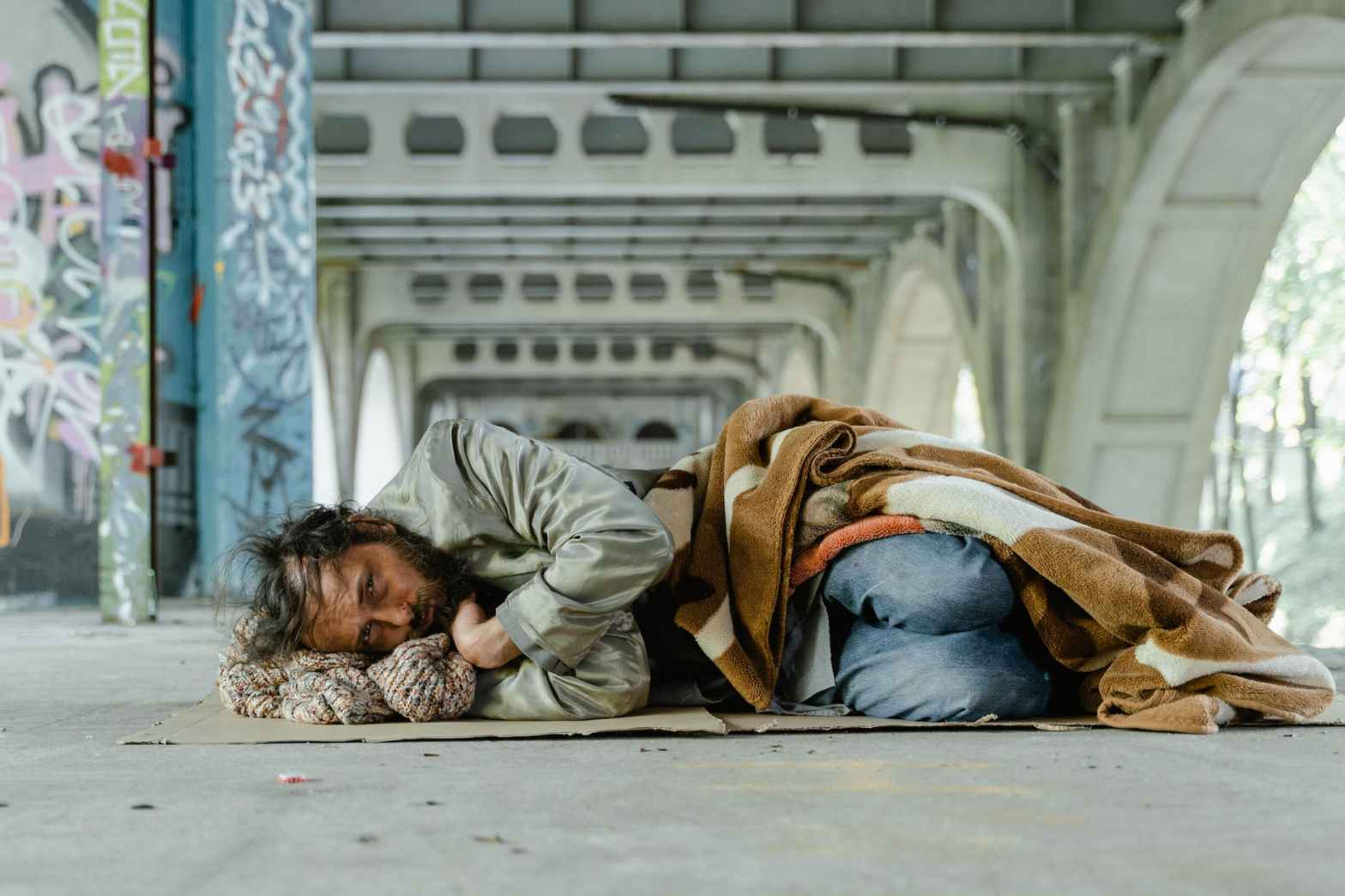
“Vagrant” is not a word that is used much today. Merriam-Webster defines it as, “one who has no established residence and wanders idly from place to place without lawful or visible means of support.” Wikipedia notes that vagrants “usually live in poverty and support themselves by begging, scavenging, petty theft, temporary work, or social security.” Historically, vagrancy was illegal. It was punished with forced labor, military service, or imprisonment. This long-standing approach was ended in the 1960s, not by police chiefs or mayors, and not by congressmen or senators, but by unelected judges. We don’t use the word “vagrant” anymore, but the definition fits “unhoused person” almost perfectly.
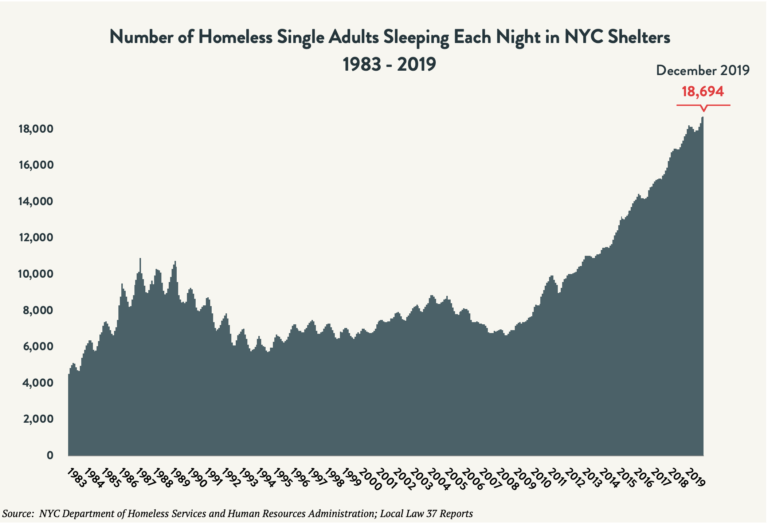
The judicial branch’s decision to take over homeless policy happened quietly but had a lasting negative effect. Between 1960 and 1980 justices and judges struck down laws aimed at criminalizing vagrancy. In the years since, as everyone knows, the problem exploded. New York is an obvious example:
Local governments have an interest in regulating or even prohibiting homelessness, especially the adverse health and safety effects that it caused on others. They can choose to use “carrots,” such as free housing, to get people off the streets. Or they can use “sticks,” such as vagrancy laws, to discourage the problem. Or at least they used to be able to, until the judicial branch decided to limit local choice.
Once the judicial branch had waded into this area, it showed no inclination to wade out. The Ninth Circuit’s recent decision in Johnson, et al., v City of Grants Pass (9th Cir. 2023) __ F.4th __, 2023 WL 4350948 is a perfect example. Grant’s Pass is a small town in Oregon. In response to it’s homeless problem it passed city ordinances banning camping in public parks and sleeping in public. Repeat violators could be prosecuted for trespass. (Id. at p. 4.) Homeless advocates sued and the Ninth Circuit decided that the Eighth Amended prohibited “the imposition of criminal penalties for sitting, sleeping, or lying outside on public property for homeless individuals who cannot obtain shelter.” (Martin v. City of Boise (9th Cir. 2018) 902 F.3d 1031, 1048.) Did the founders, who were enthusiastically criminalizing vagrancy, intend for this result? I think the answer is so obvious that it doesn’t even need to be discussed.
Several justices, however, discussed the point in dissent.
[W]ith no mooring in the text of the Constitution, our history and traditions, or the precedent of the Supreme Court, the court has taken our national founding document and used it to enact judge-made rules governing who can sit and sleep where, rules whose ill effects are felt not merely by the States, and not merely by our cities, but block by block, building by building, doorway by doorway. Local leaders—and the people who elect them— must be allowed the latitude to address on the ground the distinctly local features of the present crisis of homelessness and lack of affordable housing. Not every challenge we face is constitutional in character. Not every problem in our country has a legal answer that judges can provide. This is one of those situations.
To understand why this matters we have to understand the current homeless crisis. The only solution our local leaders have left is to build housing and try to move people into it. Building housing is incredibly expensive. Some would say it is prohibitively expensive. There are 75,518 homeless people in Los Angeles County. It costs roughly $600,000 to build housing for one homeless person in Los Angeles. A little back-of-the-envelope math gives us the total cost to build housing for every homeless person in Los Angeles. It’s $45,310,800,000. That’s 45 billion dollars. The entire Los Angeles City budget is 11 billion dollars. If LA spent that entire budget on homelessness, and spent nothing on police, fire, parks, etc., it would take four years to save the money to build those units. But Mayor Karen Bass is only proposing to spend 1.3 billion. At that rate, it would take 34 years to save the money to build those units. Only by then, the problem would presumably only be worse. The point is: there is no way for political leaders to build their way out of the homelessness problem.
Without the ability to build enough units to house all the homeless, local leaders used to be able to discourage people from choosing to live on the street without working. These anti-vagrancy laws are off the table now, thanks to the judicial branch. Why they chose to insert themselves into these political decisions (hubris? well-intentioned overreach?) is irrelevant. The choice is no longer with us, but with judges, and that isn’t a good thing for people who want to decide these questions for themselves. If you are an idealistic young person that wants to end homelessness, voting is not enough, nor is going into politics. The only real way to work on this problem now is to become a federal judge, because these judges are really running the homelessness problem now.
Notes
Here’s the Twitter post that started me down this road:
A good summary of the argument in Newsweek.

